Performed by Dr. P. Prakash at Dr P Prakash
Tendon Transfer Procedures in Hyderabad are specialized surgical interventions that restore function to paralyzed or weakened muscles by redirecting functional tendons to compensate for non-functioning ones. This reconstructive technique is particularly valuable for patients with nerve injuries, brachial plexus injuries, spinal cord damage, or congenital deformities affecting hand, foot, or upper limb movement. Dr P Prakash offers expert tendon transfer surgery with comprehensive rehabilitation support.
We believe in honest, upfront disclosure so you can make an informed decision.
A step-by-step look at what happens during this procedure.
Detailed examination evaluates muscle strength, identifies functional and non-functional muscles, assesses joint mobility, and determines the optimal donor tendons for transfer based on nerve injury pattern and functional deficit.
Under anaesthesia, carefully planned incisions expose both the donor tendon (which is functioning) and the recipient site where the paralyzed muscle needs restoration. Meticulous dissection protects surrounding nerves and blood vessels.
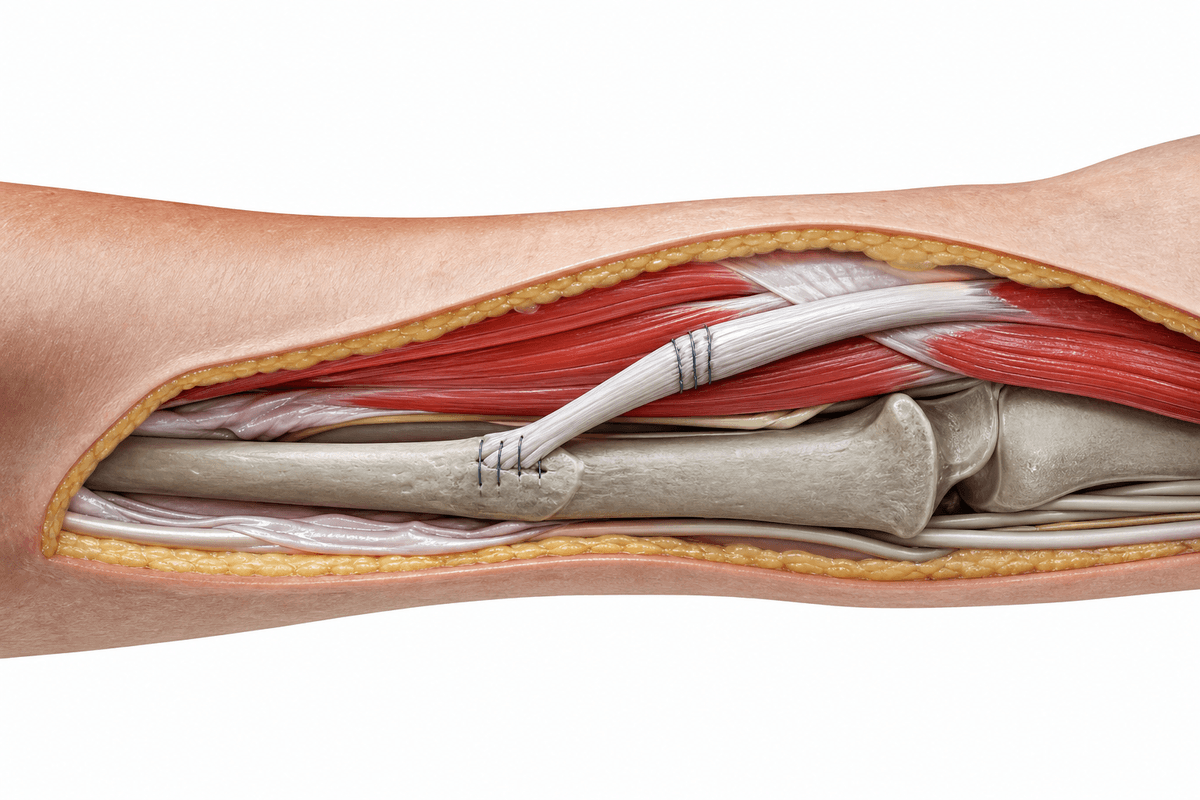
The selected donor tendon is carefully detached from its original insertion point while maintaining adequate length and preserving its muscle-tendon junction and neurovascular supply to ensure viability after transfer.
The harvested tendon is rerouted through new anatomical pathways, often using pulleys or tunnels, and secured to the bone or recipient tendon using sutures, anchors, or weaving techniques with appropriate tension to optimize function.
After ensuring proper tension and positioning, incisions are closed in layers. The limb is immobilized in a protective splint or cast in a position that prevents tension on the transferred tendon during the critical healing phase.
A structured, patient-first approach from first consultation to full recovery.
Dr P Prakash conducts thorough clinical examination including muscle charting, electromyography, and imaging to precisely map functional and non-functional muscles, ensuring the most appropriate tendon transfer strategy for each patient's unique deficit.
Each tendon transfer is meticulously planned considering the patient's functional goals, occupation, hand dominance, and available donor tendons. Dr Prakash uses evidence-based transfer techniques with proven functional outcomes.
Using advanced microsurgical instruments and techniques, Dr P Prakash performs tendon transfers with optimal tension, secure fixation, and minimal trauma to surrounding tissues, maximizing the potential for functional recovery and preventing complications.
Dr Prakash coordinates with specialized hand therapists to implement a phased rehabilitation program starting with protected immobilization, progressing to controlled mobilization, tendon re-education exercises, and strengthening to achieve maximum functional restoration.
What to expect at each stage of your recovery journey.
The first 3-6 weeks involve strict limb immobilization in a protective splint or cast to allow tendon healing at the new insertion site. Patients maintain elevation, manage pain with prescribed medications, and attend regular wound checks while avoiding any active movement.
From weeks 6-12, gradual protected motion begins under therapist supervision. Patients learn tendon re-education exercises to develop new motor patterns, practice controlled range of motion activities, and wear protective splints between exercise sessions to prevent rupture.
After 12 weeks, progressive resistance exercises strengthen the transferred tendon. Patients practice functional activities, improve coordination and precision, and gradually return to daily activities and occupation with continued therapy until optimal function is achieved at 4-6 months.
Successful tendon transfer restores voluntary movement to previously paralyzed limbs, enabling patients to perform grasp and release functions, achieve opposition movements in the hand, restore dorsiflexion in foot drop, or regain elbow flexion depending on the specific transfer performed.
Patients experience significant enhancement in activities of daily living including self-feeding, dressing, writing, and personal hygiene. Restored hand or foot function reduces dependency on assistive devices and caregivers, dramatically improving quality of life and self-sufficiency.
Return of functional movement enables many patients to resume work activities, pursue hobbies, and engage in recreational activities that were impossible before surgery. Improved limb function translates to better vocational opportunities and economic independence.
Well-executed tendon transfers provide durable, lasting functional improvement with studies showing sustained benefits for decades. Proper rehabilitation and tendon re-education establish new motor patterns that become automatic, providing permanent functional restoration in most patients.
Let's clear up some of the most common myths about tendon transfer procedures.
Get a personalised assessment from an experienced specialist. Understand your options, ask your questions, and decide with confidence.