Treated by Dr. P. Prakash at Dr P Prakash
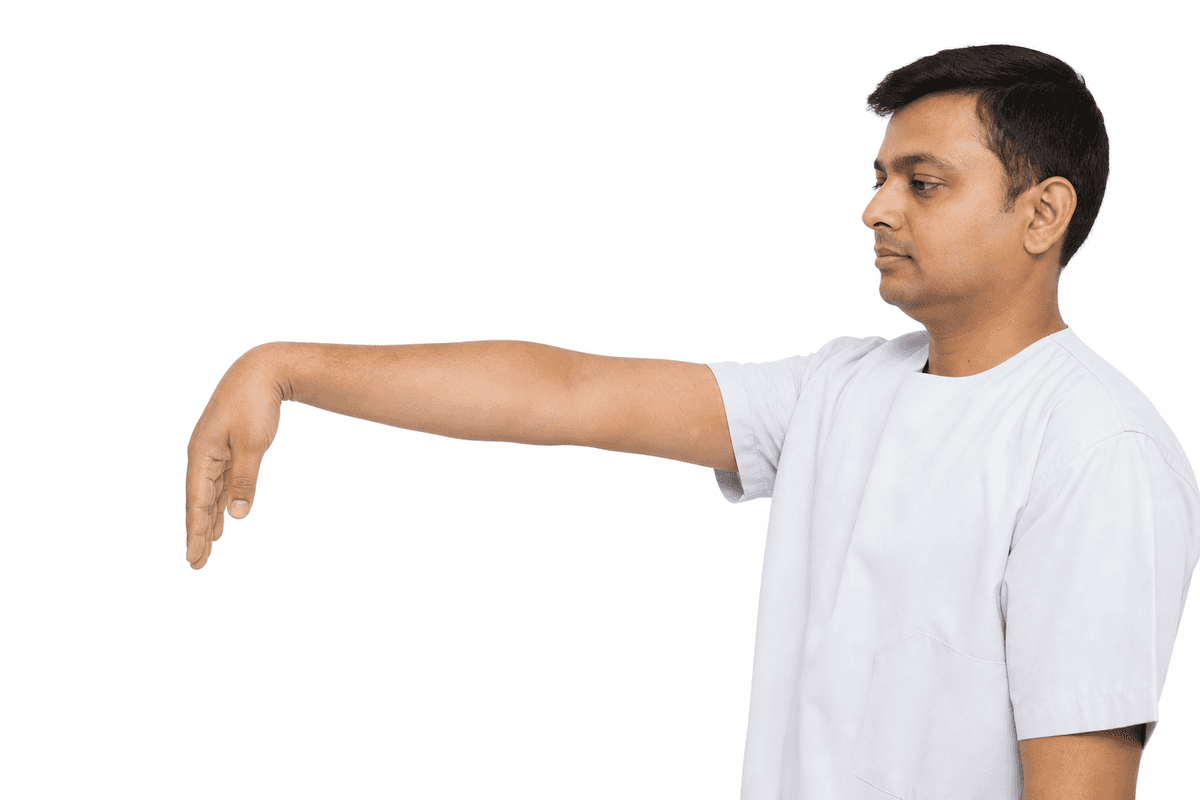
Wrist Drop, also known as radial nerve palsy, is a condition affecting patients in Hyderabad where the inability to extend the wrist and fingers occurs due to radial nerve damage. This neurological condition results in the hand hanging limply when attempting to lift it, significantly impacting daily activities and hand function. Dr P Prakash specializes in the comprehensive surgical management of Wrist Drop, offering advanced nerve repair and tendon transfer procedures to restore hand function and improve quality of life for patients.
Nerve damage in the upper arm affecting wrist extension, finger extension, and thumb extension. This type results from injuries near the spiral groove of the humerus and causes complete inability to extend the wrist and fingers with preserved elbow flexion.
Selective damage to the deep branch of the radial nerve below the elbow, affecting finger and thumb extension while preserving wrist extension. This condition often results from nerve compression or entrapment and presents with selective weakness of finger extensors.
Acute compression of the radial nerve in the spiral groove caused by prolonged pressure during sleep or unconsciousness. This temporary form of wrist drop typically has good prognosis with spontaneous recovery expected within weeks to months depending on nerve damage severity.
Multiple factors can contribute to the development and progression of this condition.
Wrist Drop develops gradually. Recognising symptoms early gives you more treatment options.
From conservative to surgical — we always start with the least invasive option first.
A structured, patient-first approach from first visit to full recovery.
Dr P Prakash conducts detailed clinical examination including manual muscle testing of all radial nerve-innervated muscles, sensory mapping of the dorsal hand, and assessment of functional deficits. Electrodiagnostic studies including nerve conduction velocity and electromyography are ordered to determine the severity and location of nerve injury and predict recovery potential.
Based on diagnostic findings, injury mechanism, time since onset, and patient functional requirements, Dr P Prakash develops an individualized treatment strategy. This may involve initial conservative management with splinting and observation for neuropraxic injuries, surgical intervention for nerve compression or transection, or tendon transfer planning for chronic cases with poor prognosis for nerve recovery.
Dr P Prakash performs precise microsurgical procedures including nerve decompression, nerve repair with microscopic suturing techniques, nerve grafting using autologous grafts, or tendon transfer reconstruction. Each procedure is executed with attention to preserving vascularity, achieving tension-free repairs, and optimizing biomechanical advantage for functional restoration.
Post-operative care includes customized splinting protocols, progressive physiotherapy with motor re-education exercises, and regular follow-up assessments to monitor recovery. Dr P Prakash coordinates with specialized hand therapists to ensure optimal functional outcomes through targeted strengthening programs, sensory re-education, and adaptive strategies for daily activities during the recovery process.
What to expect at each phase of recovery.
The surgical site is protected with splinting in optimal position while wound healing occurs. Early passive range of motion exercises begin to prevent joint stiffness, and pain management is optimized. Patients are educated on splint care, wound monitoring for signs of infection, and activity restrictions to protect the surgical repair during this critical healing period.
Progressive active mobilization begins with removal of protective splinting and initiation of active-assisted exercises. For nerve repairs, signs of nerve regeneration are monitored through advancing Tinel's sign and return of proximal muscle function. Tendon transfer patients undergo intensive motor re-education to learn new movement patterns and strengthen transferred muscles for functional tasks.
Advanced strengthening exercises focus on restoring grip strength, wrist stability, and coordination for complex hand activities. Occupational therapy addresses specific functional goals related to work, hobbies, and daily living activities. Nerve repair patients may continue showing improvement up to 18-24 months as nerve regeneration progresses distally to reinnervate hand muscles.
Patients regain the ability to actively extend the wrist against gravity, enabling proper hand positioning for grasp and manipulation tasks. This fundamental restoration allows improved grip strength and coordination for daily activities including writing, eating, and personal care.
Recovery of finger extension at the metacarpophalangeal joints and thumb extension enables patients to open the hand fully and release objects effectively. This improvement significantly enhances hand function for activities requiring controlled finger movements and object manipulation.
With restored wrist extension providing stable positioning, grip strength improves substantially as flexor muscles can function with optimal mechanical advantage. Patients experience better power grip and pinch strength essential for vocational tasks and instrumental activities of daily living.
Successful treatment enables patients to resume work activities, hobbies, and sports that require normal hand function. The restoration of functional independence and quality of life represents the ultimate goal of treatment, with most patients achieving significant improvement in hand-related disability scores.
Untreated wrist drop leads to permanent loss of wrist and finger extension function, resulting in severe functional disability and dependence for daily activities. Prolonged denervation beyond 12-18 months causes irreversible muscle atrophy and fibrosis, eliminating the possibility of nerve recovery and limiting surgical reconstruction options. Additionally, chronic flexed wrist position leads to joint contractures, skin problems, and fixed deformity requiring complex reconstructive procedures with less favorable outcomes.
Seek immediate evaluation from Dr P Prakash if you experience sudden inability to lift your hand at the wrist, especially following trauma, fracture, or prolonged pressure on the upper arm. Early consultation within the first few weeks of symptom onset is critical for optimal outcomes, as timely diagnosis determines whether nerve recovery is possible or if urgent surgical intervention is required. Patients with progressive weakness, numbness on the back of the hand, or difficulty extending fingers should not delay evaluation, as early treatment significantly improves the chances of complete functional recovery.
Early treatment means more options and better outcomes. Book a consultation to understand your condition and explore the right path forward.