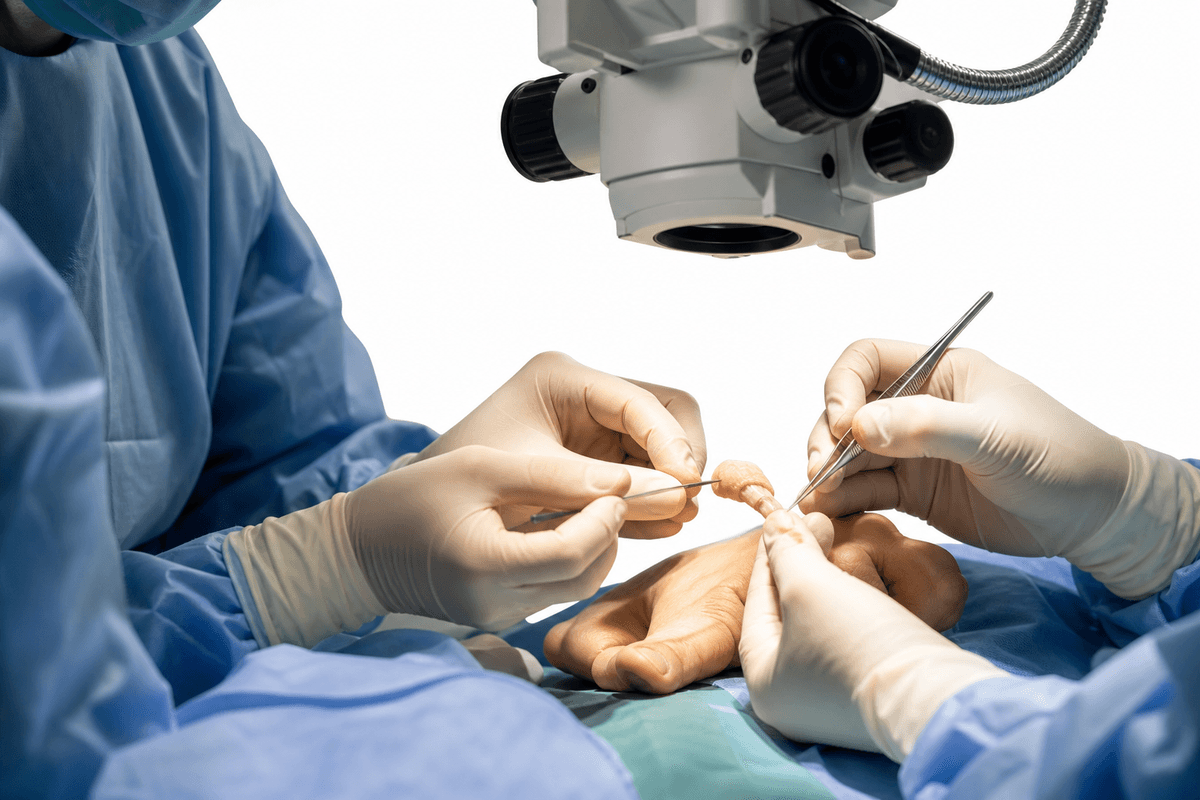
Performed by Dr. P. Prakash at Dr P Prakash
Replantation Surgery in Hyderabad is a complex microsurgical procedure that reattaches completely severed body parts, including fingers, hands, arms, and other limbs. This life-changing procedure requires immediate medical attention and specialized expertise to restore blood flow, reconnect nerves, and preserve function. Dr P Prakash offers advanced replantation techniques using state-of-the-art microsurgical equipment to maximize successful outcomes for traumatic amputation patients.
We believe in honest, upfront disclosure so you can make an informed decision.
A step-by-step look at what happens during this procedure.
The surgical team evaluates the patient's overall condition, examines the amputated part and stump, and determines viability for replantation based on injury mechanism, ischemia time, and contamination level.
Fractured bones are shortened if necessary and stabilized using wires, plates, or screws to provide a stable framework for subsequent soft tissue repair and ensure proper alignment of the replanted part.
Using high-powered surgical microscopes, arteries are reconnected first to restore blood flow, followed by veins to establish drainage. This critical step must be completed precisely to ensure tissue survival.
Severed nerves are carefully identified, aligned, and repaired under magnification using microsurgical techniques to restore sensation and motor function over time as nerves regenerate.
Tendons, muscles, and skin are repaired in layers to restore function and provide coverage. The surgical team ensures adequate soft tissue without excessive tension to promote healing.
A structured, patient-first approach from first consultation to full recovery.
Dr P Prakash conducts rapid assessment of both the patient and severed part upon arrival, determining replantation feasibility while coordinating with the emergency team to stabilize the patient and prepare for immediate surgery.
Using advanced microsurgical techniques and high-magnification equipment, Dr P Prakash meticulously reconnects blood vessels as small as 1mm in diameter, ensuring optimal blood flow restoration and maximizing chances of successful replantation.
Dr P Prakash addresses all damaged structures systematically—bones, vessels, nerves, tendons, and skin—with attention to both functional restoration and aesthetic outcomes, tailoring the approach to each patient's specific injury pattern.
Dr P Prakash provides intensive post-operative care with continuous monitoring of blood flow, tissue perfusion, and early signs of complications, implementing immediate interventions if circulation issues arise to salvage the replanted part.
What to expect at each stage of your recovery journey.
The first 7-10 days involve intensive monitoring in the hospital with elevation of the replanted part, vascular checks every hour initially, pain management, and anticoagulation therapy to prevent blood clots. Patients remain immobilized to protect delicate repairs.
From weeks 2-8, patients begin gentle passive range-of-motion exercises under physiotherapy guidance while protecting healing structures. Edema management, wound care, and gradual weaning from immobilization occur during this phase as blood vessels and nerves begin healing.
From 2-6 months onward, active strengthening exercises intensify, occupational therapy focuses on fine motor skills and daily activities, and sensation gradually returns as nerves regenerate. Full functional recovery continues for 12-24 months with ongoing rehabilitation.
Successful replantation preserves the natural body part rather than requiring prosthesis, maintaining body image and avoiding the psychological impact of permanent limb loss while retaining the potential for natural function.
Most patients regain significant function in replanted parts, with digits typically achieving 60-80% of normal range of motion and grip strength, enabling return to work and daily activities with varying degrees of adaptation.
Protective sensation returns in most cases within 6-12 months, with discriminative sensation continuing to improve for up to 2 years, allowing patients to feel temperature, pressure, and pain, though fine touch may remain diminished.
Successful replantation significantly enhances quality of life by maintaining independence in self-care, enabling continued employment, preserving recreational activities, and avoiding the functional limitations and complications associated with amputation.
Let's clear up some of the most common myths about replantation surgery.
Get a personalised assessment from an experienced specialist. Understand your options, ask your questions, and decide with confidence.