Treated by Dr. P. Prakash at Dr P Prakash
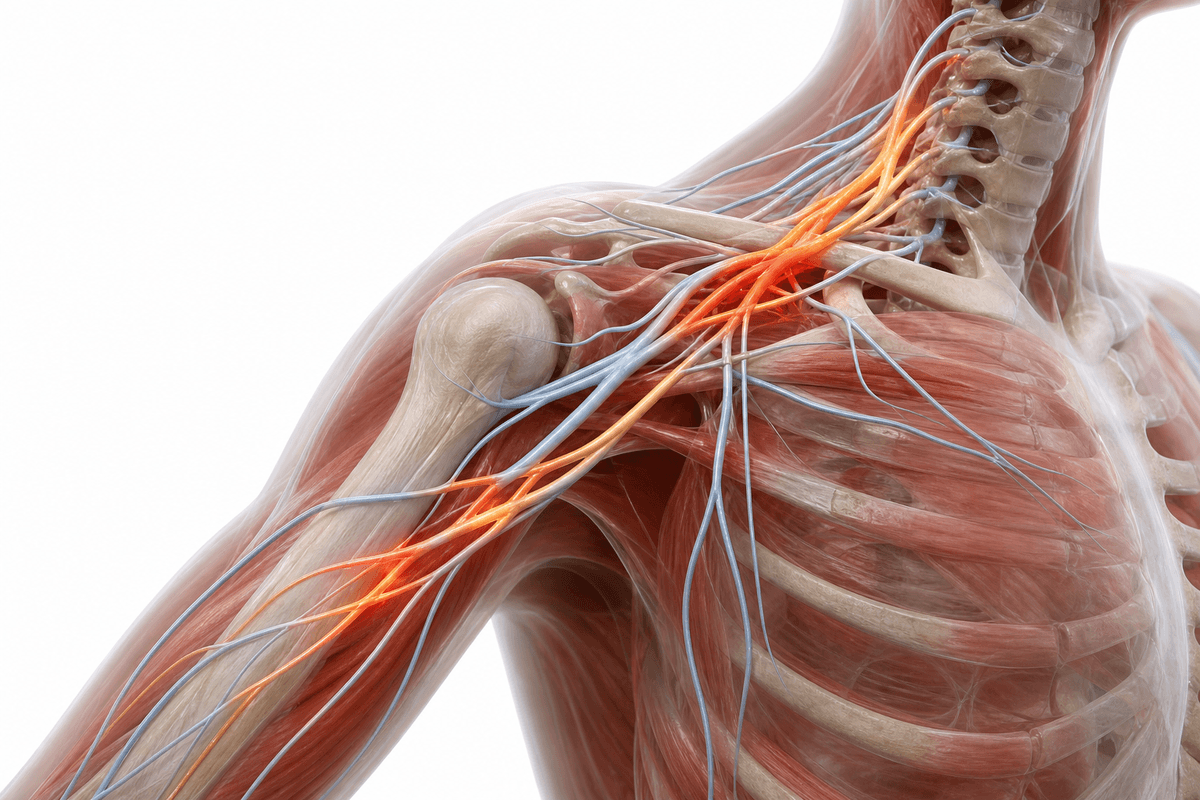
Brachial Plexus Injuries in Hyderabad involve damage to the network of nerves that send signals from the spine to the shoulder, arm, and hand. These injuries can result from trauma, birth complications, or sports accidents, leading to varying degrees of weakness, numbness, or paralysis in the affected arm. Dr P. Prakash specializes in comprehensive evaluation and advanced surgical treatment of brachial plexus injuries, offering nerve repair, nerve grafting, and tendon transfer procedures to restore function and improve quality of life for patients in Hyderabad.
Affects the upper nerves (C5-C6) of the brachial plexus, causing weakness in the shoulder and elbow. The arm typically hangs by the side with the elbow extended and forearm pronated in a characteristic waiter's tip position. Most commonly seen in newborns following difficult deliveries.
Involves damage to the lower nerves (C8-T1) of the brachial plexus, primarily affecting the hand and wrist muscles. Patients experience weakness in hand grip, finger flexion, and intrinsic hand muscles. May be accompanied by Horner's syndrome with ptosis and miosis.
The most severe form involving all nerve roots (C5-T1) of the brachial plexus, resulting in complete paralysis of the entire arm. Patients have no motor or sensory function from shoulder to fingertips. Requires comprehensive surgical reconstruction and prolonged rehabilitation.
Multiple factors can contribute to the development and progression of this condition.
Brachial Plexus Injuries develops gradually. Recognising symptoms early gives you more treatment options.
From conservative to surgical — we always start with the least invasive option first.
A structured, patient-first approach from first visit to full recovery.
Dr P. Prakash conducts detailed neurological examination assessing motor strength, sensory function, and reflex activity in all muscle groups. Advanced electrodiagnostic studies including EMG and nerve conduction studies are performed to determine the severity and location of nerve damage, guiding treatment decisions.
High-resolution MRI neurography and CT myelography are utilized to visualize nerve root avulsions, ruptures, and neuroma formation. Dr P. Prakash develops individualized surgical plans based on imaging findings, timing of injury, and patient functional goals, determining optimal nerve repair, grafting, or transfer strategies.
Dr P. Prakash performs meticulous microsurgical procedures using high-magnification techniques for precise nerve coaptation, grafting, or transfer. Intraoperative nerve stimulation and monitoring ensure accurate identification and functional assessment. Multiple nerve transfer combinations are employed for complex injuries to maximize functional recovery.
Dr P. Prakash coordinates comprehensive postoperative rehabilitation programs with specialized therapists, monitoring nerve regeneration progress through serial clinical examinations and EMG studies. Secondary reconstructive procedures including tendon transfers are planned when nerve recovery plateaus, ensuring optimal functional outcomes and quality of life.
What to expect at each phase of recovery.
Immobilization with shoulder sling or orthosis to protect nerve repairs. Wound healing and pain management are priorities. Gentle passive range-of-motion exercises begin after 2-3 weeks to prevent joint stiffness while avoiding tension on repaired nerves. Regular follow-up visits monitor surgical site healing and early complications.
Progressive physical therapy intensifies as nerve regeneration occurs at approximately 1 millimeter per day. Patients undergo serial EMG studies every 3 months to document reinnervation. Active-assisted and active exercises are introduced as muscle function returns. Electrical stimulation helps maintain muscle mass during reinnervation.
Advanced strengthening exercises and functional training restore activities of daily living. Occupational therapy focuses on fine motor skills and adaptive techniques. Secondary reconstructive procedures may be performed if nerve recovery plateaus. Most patients achieve maximum recovery by 18-24 months, though improvement may continue beyond 2 years.
Successful nerve repair or transfer procedures restore shoulder abduction, external rotation, and elbow flexion in 70-80% of patients with upper plexus injuries. Early surgical intervention within 3-6 months optimizes functional recovery, allowing patients to perform overhead activities and self-care tasks independently.
Nerve grafting and tendon transfer procedures significantly improve hand grip strength and finger function, particularly in lower plexus injuries. Patients regain ability to perform fine motor tasks including writing, grasping small objects, and manipulating tools, enhancing vocational capabilities and independence.
Surgical intervention reduces neuropathic pain in 60-70% of patients through neuroma excision and nerve reconstruction. Protective sensation returns in most cases, preventing inadvertent injury to the insensate limb. Complete sensory recovery varies depending on injury severity and time to surgical intervention.
Comprehensive surgical reconstruction combined with structured rehabilitation enables most patients to return to work and recreational activities. While complete recovery to pre-injury state is uncommon in severe injuries, significant functional improvement allows for independent living, improved self-esteem, and meaningful participation in daily activities.
Untreated brachial plexus injuries lead to permanent muscle paralysis, severe muscle atrophy, and irreversible joint contractures that eliminate any possibility of functional recovery. Chronic neuropathic pain becomes debilitating and often resistant to medical management. The affected limb becomes a functionless, insensate appendage, causing significant disability, loss of employment, psychological distress, and complete dependence on others for daily activities.
Seek immediate medical attention if you experience sudden weakness, numbness, or loss of movement in your arm following trauma, accident, or injury. Newborns with arm weakness or lack of movement after difficult delivery require urgent evaluation within the first few weeks of life, as early diagnosis and intervention within 3-6 months significantly improve outcomes. Consult Dr P. Prakash promptly if existing arm weakness is not improving with conservative treatment or if you have persistent pain and functional limitations affecting your quality of life.
Early treatment means more options and better outcomes. Book a consultation to understand your condition and explore the right path forward.