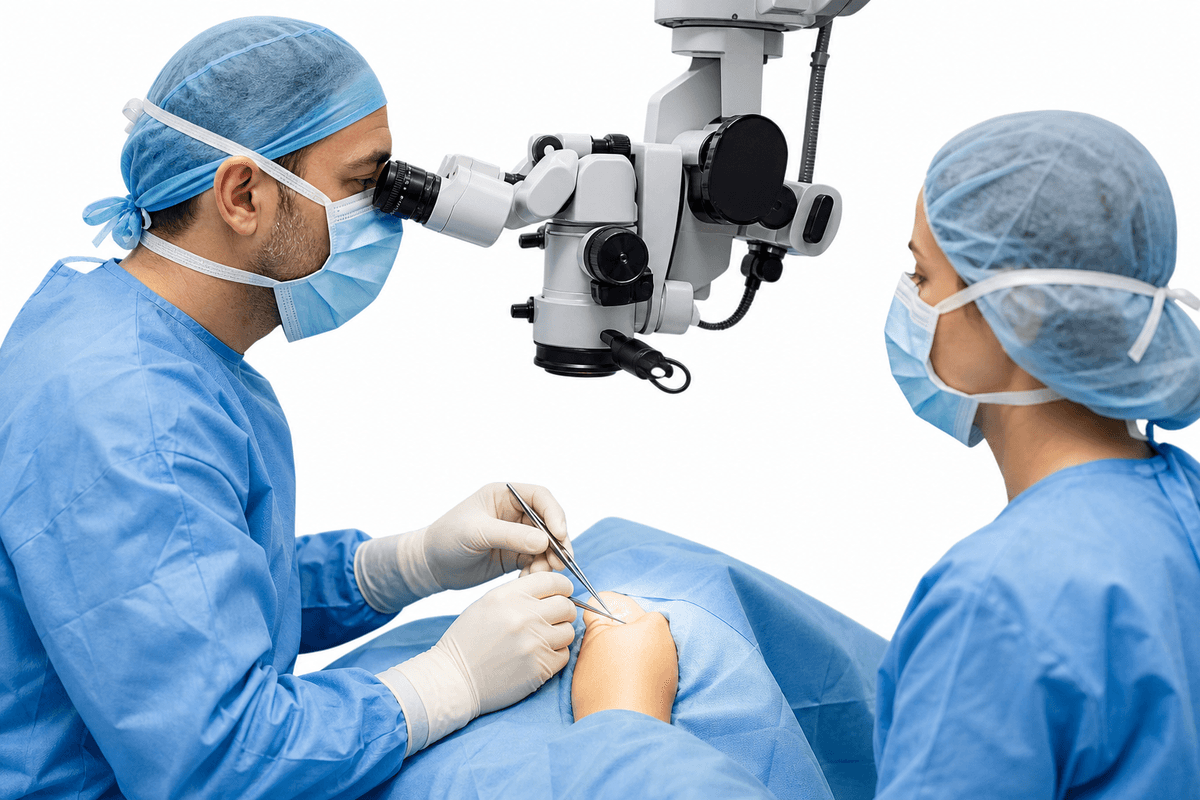
Performed by Dr. P. Prakash at Dr P Prakash
Nerve Repair Surgery in Hyderabad is a specialized microsurgical procedure that reconnects damaged or severed nerves to restore sensation, movement, and function. The procedure involves precise surgical techniques to realign nerve endings, enabling nerve regeneration and recovery of motor and sensory capabilities. Dr P Prakash utilizes advanced microsurgical expertise to deliver optimal outcomes for patients with nerve injuries.
We believe in honest, upfront disclosure so you can make an informed decision.
A step-by-step look at what happens during this procedure.
The surgeon locates the damaged nerve ends using microsurgical techniques and magnification to visualize the precise injury site and assess the extent of nerve damage.
Damaged or scarred nerve tissue is carefully removed from both nerve ends to expose healthy nerve fascicles that are capable of regeneration and proper reconnection.
The healthy nerve ends are brought together and aligned precisely under high magnification, ensuring proper fascicular matching without tension that could compromise healing.
Using fine microsurgical sutures finer than human hair, the nerve is repaired either through direct end-to-end coaptation or nerve grafting if there is a gap between nerve ends.
The surgical site is closed in layers with meticulous technique, and the limb is positioned to minimize tension on the repair site during the initial healing phase.
A structured, patient-first approach from first consultation to full recovery.
Dr P Prakash conducts comprehensive nerve conduction studies and detailed clinical examination to map the exact location and severity of nerve damage, ensuring precise surgical planning.
Using state-of-the-art operating microscopes and microsurgical instruments, Dr P Prakash performs meticulous nerve repair with optimal fascicular alignment to maximize regeneration potential.
Dr P Prakash tailors the surgical approach based on injury type, selecting direct repair, nerve grafting, or nerve transfer techniques to achieve the best functional recovery for each patient.
Dr P Prakash coordinates with physiotherapy specialists to implement structured rehabilitation programs that optimize nerve regeneration, prevent joint stiffness, and restore functional abilities progressively.
What to expect at each stage of your recovery journey.
The first 2 weeks focus on wound healing, pain management, and limb protection with splinting. Patients keep the surgical site clean and dry while following prescribed medications to prevent infection.
From weeks 3-12, gentle range-of-motion exercises begin under physiotherapy guidance to prevent joint stiffness while protecting the nerve repair. Patients gradually increase activity levels as healing progresses.
Between 3-18 months, progressive nerve regeneration occurs with gradual return of sensation and motor function. Intensive physiotherapy continues with strengthening exercises and functional training to maximize recovery outcomes.
Patients experience gradual return of protective sensation and fine touch perception in previously numb areas, improving hand function and reducing injury risk.
Muscle strength and voluntary movement progressively improve as regenerating nerve fibers reinnervate target muscles, enabling functional activities and improved quality of life.
Neuropathic pain and dysesthesias diminish as the nerve heals properly, eliminating abnormal pain signals and uncomfortable sensations associated with nerve injury.
Successful nerve repair enables patients to regain the ability to perform daily activities, work-related tasks, and recreational pursuits that were limited by nerve damage.
Let's clear up some of the most common myths about nerve repair surgery.
Get a personalised assessment from an experienced specialist. Understand your options, ask your questions, and decide with confidence.