Treated by Dr. P. Prakash at Dr P Prakash
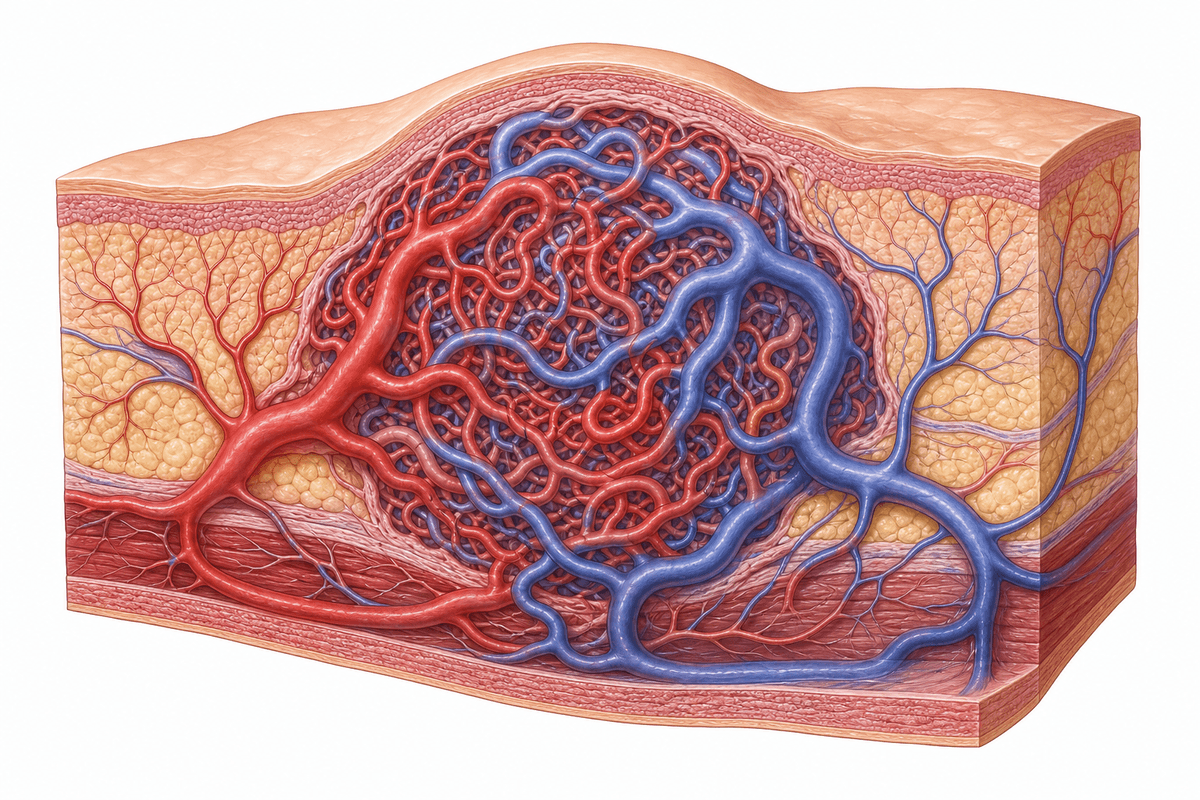
Vascular malformations are congenital abnormalities of blood vessels that develop during fetal growth, affecting patients across Hyderabad with varying degrees of functional and cosmetic concerns. These malformations can involve arteries, veins, capillaries, or lymphatic vessels, presenting as visible lesions or deeper structural anomalies that may cause pain, swelling, or functional impairment. Dr P Prakash provides comprehensive evaluation and advanced surgical treatment for vascular malformations at his Hyderabad clinic.
Also known as port-wine stains, these are flat, pink to red-purple patches caused by dilated capillaries in the skin. They are present at birth and may darken or thicken over time without treatment.
Abnormal dilated veins that create soft, compressible masses, typically blue in color. They may expand with dependency or activity and can cause pain, swelling, and thrombosis within the malformed vessels.
Complex abnormal connections between arteries and veins without intervening capillaries. These high-flow lesions can cause warm, pulsatile masses, skin changes, pain, and potentially life-threatening bleeding or heart failure if extensive.
Multiple factors can contribute to the development and progression of this condition.
Vascular Malformations develops gradually. Recognising symptoms early gives you more treatment options.
From conservative to surgical — we always start with the least invasive option first.
A structured, patient-first approach from first visit to full recovery.
Dr P Prakash conducts thorough physical examination and coordinates advanced imaging including MRI, CT angiography, and Doppler ultrasound to characterize the malformation type, extent, and flow characteristics, enabling precise treatment planning.
Complex vascular malformations require coordinated care, so Dr P Prakash collaborates with interventional radiologists, vascular surgeons, and pediatric specialists to develop individualized treatment strategies that balance symptom relief, functional preservation, and aesthetic outcomes.
For extensive malformations, Dr P Prakash implements a staged approach combining embolization, sclerotherapy, and surgical excision performed in carefully timed sequences to safely reduce lesion burden while minimizing complications and optimizing healing between procedures.
Dr P Prakash provides ongoing monitoring with regular clinical assessments and periodic imaging to detect recurrence, manage residual symptoms, and coordinate additional interventions if needed, ensuring sustained improvement and patient satisfaction throughout growth and development.
What to expect at each phase of recovery.
Following sclerotherapy or embolization, patients experience localized swelling, bruising, and discomfort managed with analgesics and compression. Surgical patients require wound care, drain management, and activity restrictions for 2-4 weeks with close monitoring for bleeding or infection.
Over 4-12 weeks, swelling subsides, incisions heal, and patients gradually resume normal activities. Physical therapy may be prescribed to restore range of motion and strength. Serial examinations assess treatment response and identify any need for additional interventions.
Complete resolution of symptoms and lesion shrinkage continues for 3-6 months post-treatment. Dr P Prakash schedules periodic follow-up visits with imaging at 6-12 month intervals to monitor for recurrence and ensure durable improvement in both function and appearance.
Most patients experience significant reduction in pain, swelling, and functional limitations following appropriate treatment, with over 80% reporting satisfactory symptom control and improved quality of life even when complete lesion eradication is not achievable.
Surgical excision and sclerotherapy substantially reduce visible deformity and skin discoloration, restoring more symmetric contours and natural appearance. Patients report enhanced self-confidence and reduced psychological burden from visible malformations.
Treatment enables improved mobility, grasp, speech, breathing, or other functions compromised by malformation bulk or location. Early intervention particularly in children prevents developmental complications and skeletal distortion from progressive lesion growth.
Timely treatment prevents serious complications including life-threatening hemorrhage, high-output cardiac failure from arteriovenous shunting, chronic pain syndromes, limb length discrepancies, and progressive disfigurement that becomes increasingly difficult to manage.
Untreated vascular malformations typically enlarge over time, especially during growth spurts, pregnancy, or following trauma, leading to progressive disfigurement, chronic pain, and functional impairment. High-flow arteriovenous malformations can cause catastrophic bleeding, skin ulceration, tissue destruction, or heart failure from excessive blood shunting. Delayed treatment makes intervention more complex with higher complication rates and poorer outcomes as surrounding tissues become increasingly involved.
Seek immediate consultation with Dr P Prakash if you notice a congenital birthmark that grows disproportionately, becomes painful, bleeds spontaneously, or causes functional difficulties such as vision problems, breathing obstruction, or limb weakness. Early evaluation is crucial for any pulsatile mass, skin discoloration with warmth, or facial asymmetry developing in children, as timely intervention prevents complications and optimizes aesthetic and functional outcomes before adolescence.
Early treatment means more options and better outcomes. Book a consultation to understand your condition and explore the right path forward.