Treated by Dr. P. Prakash at Dr P Prakash
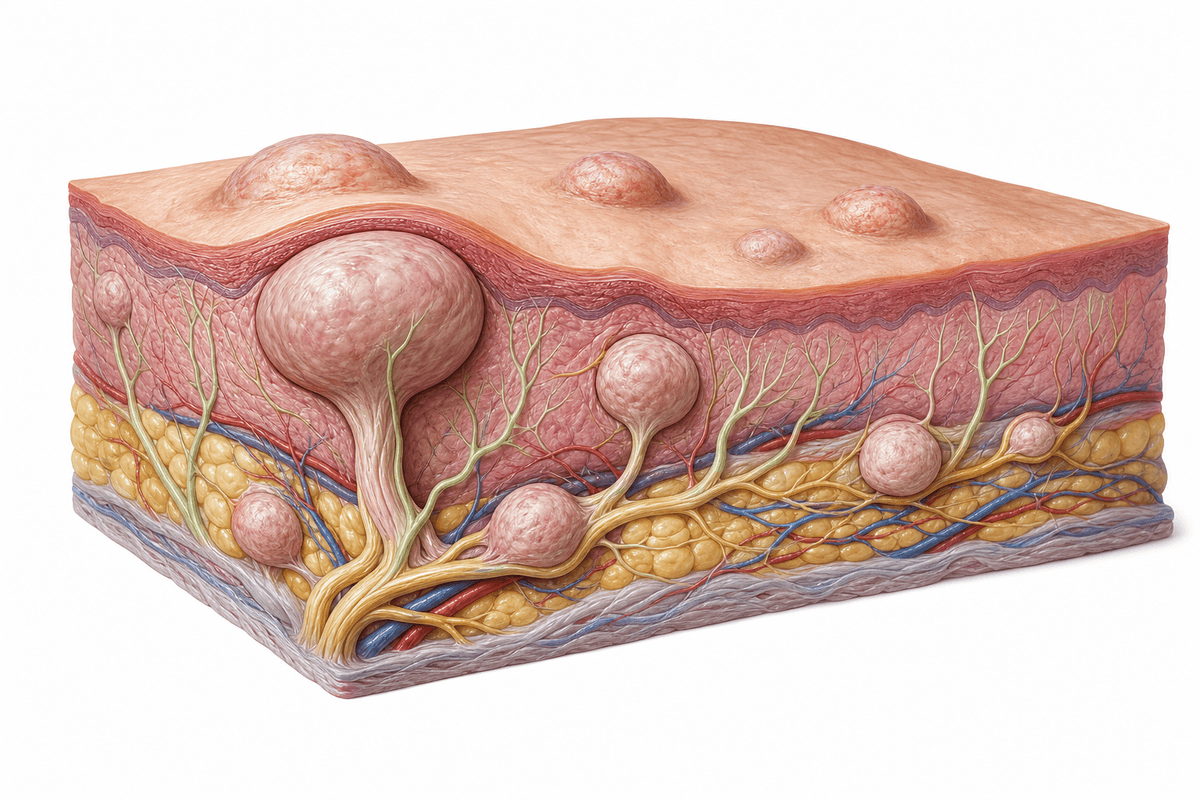
Neurofibromas are benign nerve sheath tumors that develop along nerves throughout the body, commonly affecting patients in Hyderabad and worldwide. These soft, fleshy growths arise from nerve tissue and can occur as solitary lesions or multiple tumors, particularly in individuals with neurofibromatosis type 1. Surgical excision is often recommended when neurofibromas cause pain, functional impairment, or cosmetic concerns. Dr P Prakash provides specialized surgical treatment for neurofibromas using precise microsurgical techniques to preserve nerve function while achieving optimal aesthetic outcomes.
Small, soft tumors that develop in or just beneath the skin, appearing as flesh-colored or pigmented bumps. These are the most common type and typically measure less than 2 cm in diameter.
Deeper tumors that grow beneath the skin layer along peripheral nerves, often presenting as firm nodules that may be tender to touch. They can cause localized pain and sensory changes.
Large, diffuse tumors involving multiple nerve branches that can affect extensive areas and may cause significant disfigurement. These complex lesions carry a higher risk of malignant transformation.
Multiple factors can contribute to the development and progression of this condition.
Neurofibromas develops gradually. Recognising symptoms early gives you more treatment options.
From conservative to surgical — we always start with the least invasive option first.
A structured, patient-first approach from first visit to full recovery.
Dr P Prakash conducts thorough clinical examination to assess neurofibroma location, size, and relationship to vital structures. Advanced imaging including MRI is utilized to evaluate tumor extent and nerve involvement, ensuring precise surgical planning tailored to each patient's unique presentation.
A customized surgical strategy is developed based on tumor characteristics, patient symptoms, and functional goals. Dr P Prakash discusses all treatment options, expected outcomes, and potential risks, ensuring patients make informed decisions about their care.
Using advanced microsurgical techniques and intraoperative nerve monitoring, Dr P Prakash meticulously removes neurofibromas while preserving critical nerve function. Specialized instrumentation and magnification enable precise dissection, minimizing collateral tissue damage and optimizing functional preservation.
When necessary, Dr P Prakash performs sophisticated reconstructive procedures to restore contour and appearance following neurofibroma excision. Comprehensive postoperative care includes wound management, functional rehabilitation, and long-term surveillance to monitor for recurrence and ensure optimal outcomes.
What to expect at each phase of recovery.
First 1-2 weeks involve wound care, pain management, and activity modification. Sutures are typically removed within 10-14 days. Patients experience mild to moderate discomfort managed with prescribed medications, with gradual return to light daily activities.
Weeks 2-6 focus on progressive activity resumption and rehabilitation. Any temporary nerve symptoms typically improve during this period. Physical therapy may be recommended to optimize function, with most patients returning to normal activities by 6-8 weeks postoperatively.
Ongoing surveillance continues beyond 3 months with periodic clinical examinations to detect any recurrence or new tumor development. Scar maturation progresses over 6-12 months, with final aesthetic results becoming apparent. Regular follow-up ensures early detection of any concerns.
Successful excision of symptomatic neurofibromas with clear surgical margins, eliminating pain and functional impairment while achieving excellent cosmetic results with minimal scarring.
Maintained or improved neurological function following surgery through precise microsurgical techniques and intraoperative monitoring, with minimal risk of postoperative sensory or motor deficits.
Improved appearance and contour following removal of disfiguring neurofibromas, with reconstructive techniques providing natural-looking results that enhance patient confidence and quality of life.
Resolution of pain, numbness, tingling, and other neurological symptoms caused by neurofibroma compression, allowing patients to return to normal activities without discomfort or functional limitation.
Untreated neurofibromas may continue to grow, causing progressive pain, neurological symptoms, and functional impairment. Large tumors can result in significant cosmetic disfigurement affecting quality of life and self-esteem. While most neurofibromas remain benign, plexiform types carry a 10-15% risk of malignant transformation to peripheral nerve sheath tumors, making surveillance and timely intervention essential.
Consultation with Dr P Prakash is recommended when neurofibromas cause persistent pain, numbness, weakness, or functional limitations affecting daily activities. Rapid growth, changes in tumor appearance, or development of new neurological symptoms warrant immediate evaluation. Patients concerned about cosmetic appearance or those with multiple neurofibromas should seek expert assessment for comprehensive treatment planning.
Early treatment means more options and better outcomes. Book a consultation to understand your condition and explore the right path forward.