Performed by Dr. P. Prakash at Dr P Prakash
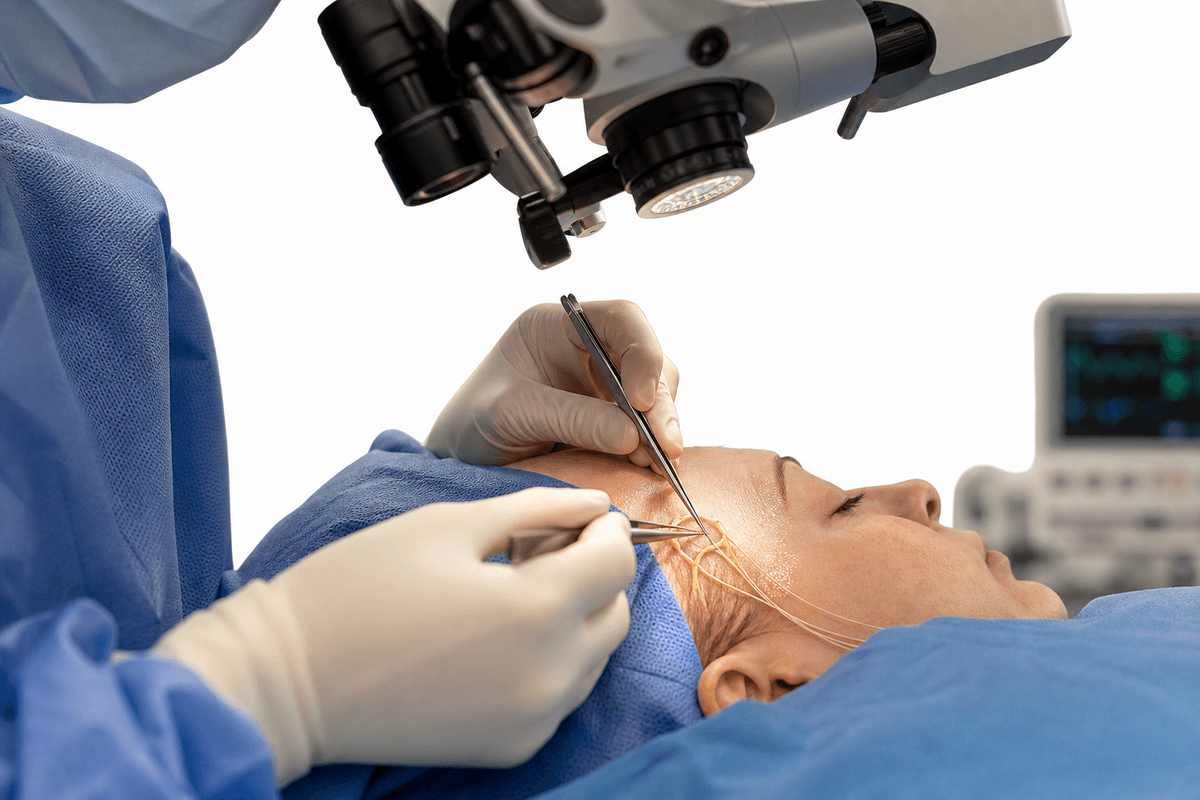
Facial Reanimation Surgery in Hyderabad is a specialized reconstructive procedure designed to restore facial movement and expression in patients with facial paralysis. This complex surgery involves nerve grafts, muscle transfers, or nerve transfers to reanimate the face and improve both function and aesthetics. Dr P Prakash offers advanced facial reanimation techniques with personalized treatment plans for optimal outcomes.
We believe in honest, upfront disclosure so you can make an informed decision.
A step-by-step look at what happens during this procedure.
Detailed assessment of facial nerve function using electromyography, nerve conduction studies, and imaging to determine the extent of paralysis and identify the most appropriate reanimation technique for each patient's unique condition.
Healthy functioning nerves from adjacent areas are transferred to the paralyzed facial muscles, or nerve grafts are harvested from other body parts to bridge the gap between the nerve and muscle, allowing nerve signals to reach facial muscles.
In cases where local facial muscles are not viable, functional muscle tissue with its blood supply and nerve is transferred from the thigh or other donor sites to the face, creating new pathways for facial movement and smile restoration.
Using advanced microsurgical techniques under high magnification, nerves and blood vessels are meticulously connected to ensure proper integration of transferred tissues, maintaining blood flow and establishing neural pathways for muscle reinnervation.
Additional procedures such as brow lift, eyelid weight placement, or contralateral facial procedures may be performed simultaneously to achieve optimal facial symmetry and protect eye function while the reanimation process progresses over months.
A structured, patient-first approach from first consultation to full recovery.
Dr P Prakash conducts thorough facial nerve mapping and electrophysiological studies to design a customized surgical approach tailored to each patient's specific paralysis pattern, duration, and functional goals, selecting from nerve transfers, muscle transfers, or combination techniques.
Utilizing state-of-the-art microsurgical instruments and high-powered magnification, Dr P Prakash performs precise nerve coaptation and vascular anastomosis with meticulous attention to detail, ensuring optimal nerve regeneration and muscle reinnervation for natural facial movement.
Our team provides dedicated pre-operative counseling, intraoperative monitoring of nerve function, and structured post-operative rehabilitation protocols including physical therapy and facial retraining exercises to maximize functional recovery and aesthetic outcomes.
Dr P Prakash implements a systematic follow-up program with regular assessments of nerve regeneration, muscle function, and facial symmetry over 12-24 months, with adjustments to therapy protocols and consideration of refinement procedures to achieve optimal long-term results.
What to expect at each stage of your recovery journey.
The first 2-4 days involve hospital stay with facial dressing, pain management, and monitoring for complications. Swelling and bruising are expected, with limited facial movement. Patients receive instructions on wound care, medication, and protecting the surgical site.
Weeks 1-8 focus on wound healing and beginning gentle facial exercises as directed. Swelling gradually subsides, sutures are removed, and patients attend regular follow-up appointments. Physical therapy may begin to prevent muscle atrophy and prepare for reinnervation.
Months 3-24 represent the critical reinnervation period where nerve regeneration occurs at approximately 1mm per day. Structured facial retraining exercises, biofeedback therapy, and neuromuscular reeducation help patients regain voluntary facial control with progressive improvement in symmetry and expression.
Patients experience significant improvement in voluntary facial expressions including smiling, eye closure, and eyebrow elevation, with most achieving symmetrical movement patterns that enhance communication and social interaction, typically reaching 70-80% of normal facial function.
The surgery substantially improves facial balance at rest and during animation, reducing the visible asymmetry caused by paralysis and creating a more harmonious appearance that boosts self-confidence and quality of life in social and professional settings.
Beyond aesthetics, patients gain better eye protection through improved eyelid closure, enhanced oral competence for eating and drinking without drooling, clearer speech articulation, and restoration of emotional expression, significantly impacting daily living activities.
Once nerve regeneration is complete, the restored facial function remains stable and continues to improve with facial exercises, providing lasting benefits that can be maintained for decades with proper care and occasional refinement procedures if needed.
Let's clear up some of the most common myths about facial reanimation surgery.
Get a personalised assessment from an experienced specialist. Understand your options, ask your questions, and decide with confidence.